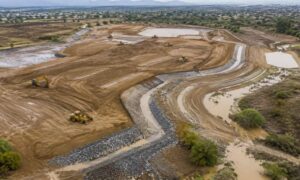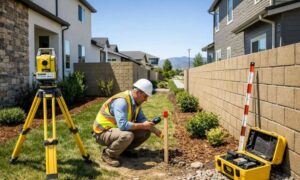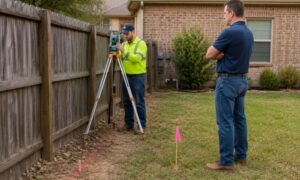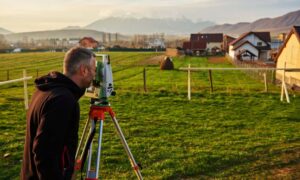
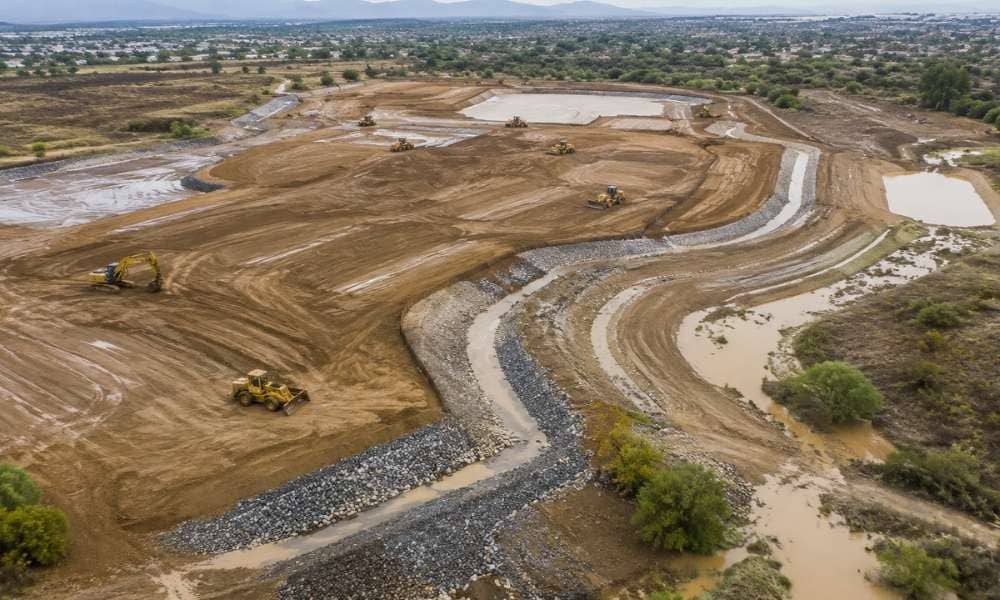
Nevada is getting wetter storms. They hit hard and fast. Developers who ignore this are setting up their sites for drainage problems. A topographic survey shows what the ground actually looks like today. That is where smart grading starts.
Why Historical Drainage Assumptions No Longer Tell the Full Story
Old rainfall data guided grading for a long time. Engineers used those numbers to figure out where water would go and how fast it would move. The system worked when storms were predictable.
That has changed.
Storms are stronger now. They carry more water in less time. Older drainage models were not built for this.
When a grading plan uses old rainfall data, it may look fine on paper but fail when it rains. Water pools in the wrong places. Drainage paths get overwhelmed.
A topographic survey gives you real data from the ground as it is right now. That is what a solid grading plan needs to work.
How Topographic Survey Data Helps Identify Emerging Flow Paths
Water always finds a way through. As land is developed and storms change, new runoff paths form. Some are easy to spot. Most are not.
A topographic survey shows small terrain details that affect how water moves. Slight ridges, shallow dips, and minor grade changes can push runoff in unexpected directions. You will not see these on a basic site walk.
If a grading plan misses these details, water ends up where it was never meant to go.
A topographic survey helps find:
- Low spots where water collects
- Small ridges that split drainage areas
- Existing channels that carry water across the site
- Slope changes that speed up or slow down runoff
- Spots where water from neighboring land enters the site
Knowing this before grading starts lets developers work with how water moves, not against it.
Designing Finished Grades Around Larger Stormwater Volumes
Grading plans are changing. The question is not just where water goes. It is how much water is coming and whether the site can handle it.
More pavement and rooftops mean less water soaks into the ground. More of it runs off the site in a short amount of time. Add stronger storms to that, and you get a lot more water moving fast.
Grading teams are adjusting with a few key strategies:
Wider drainage paths. Swales and low areas need more room to carry larger amounts of water safely.
Smoother slope changes. Sudden grade drops cause erosion and push water into tight spots. Gradual transitions spread runoff out more evenly.
Grade breaks placed near drainage divides. Using survey data, graders can direct water away from buildings and toward areas built to handle it.
All of these need accurate elevation data. A topographic survey gives grading teams what they need to place these features in the right spots.
Why Small Elevation Differences Are Becoming More Important
A difference of a few tenths of a foot used to seem minor. It often still looks small on a plan. But during heavy rain, small elevation differences decide whether water drains or sits against a building.
A 1 percent slope moves water slowly. During a strong storm, that may not be fast enough. A 0.5 percent slope can act almost flat when rainfall is heavy.
Topographic surveys are now being done with tighter accuracy to catch these small differences. Closer data points give grading teams a clearer picture of how the site will drain under pressure.
This helps with:
- Setting pad elevations high enough above the surrounding ground
- Grading paved areas so they drain without puddles
- Sloping the ground away from buildings at the right angle
- Sizing low areas based on exact elevation readings
On big sites, these details affect hundreds of grading choices. On small sites, they can be the difference between passing or failing inspection.
Using Topographic Surveys to Support Long-Term Site Performance
Grading used to end when construction finished. The grade was set, inspections passed, and that was it. That thinking is shifting.
Developers are now planning further ahead. Rainfall will keep changing. A grading plan built for today needs to hold up over time.
Survey-based planning helps sites perform well long-term in three ways:
It creates a starting record. A survey before construction documents the original ground conditions. If drainage problems show up later, that record shows what changed.
It guides upkeep. Over time, grades settle, slopes erode, and drains get blocked. A follow-up survey shows where original grades have shifted and what needs to be fixed.
It supports permit updates. Nevada stormwater rules are evolving. Having original topographic data on file makes it easier to show compliance when rules change.
A grading plan is not a one-time fix. It is a starting point. Good data behind it makes it easier to update as conditions shift.