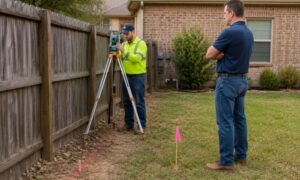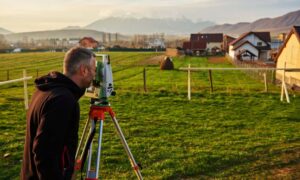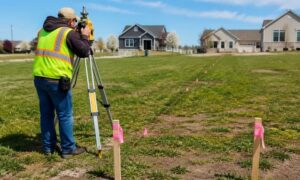
Property survey cost depends on lot size, access, records, terrain, and your reason for needing the survey. A simple boundary check costs less. A survey for building or permits costs more because it needs extra detail, fieldwork, and documentation.
If you plan to buy land or build, this question comes up fast.
How much will the survey cost?
There is no flat price. Two lots that look similar can have very different costs. Surveyors price based on the work involved, not just the size of the land.
If you know what affects the price, you can avoid surprises and make better decisions before you request a quote.
Why survey costs vary
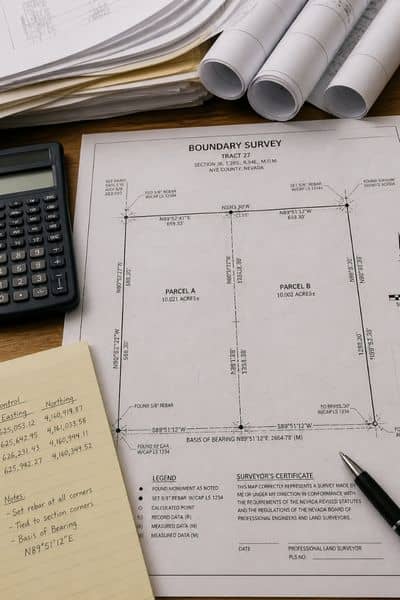
Survey costs vary because every property has different conditions. In Pahrump, large rural parcels, desert terrain, unclear access, and older records can make survey work more complex. Surveyors price based on time, research, and fieldwork.
Pahrump is not like a tight city grid. Many parcels sit far apart. Some have old descriptions. Some have no visible markers.
That means more time in the field. More time checking records. More time confirming what is already on paper.
All of that adds to the final cost.
Lot size and shape
Size matters, but shape matters too.
A larger lot takes longer to measure. Survey crews walk more ground and set more points. That part is easy to understand.
Shape is where things change.
A clean square lot is simple. A lot with bends, angles, or uneven sides needs more checks. Each corner must be confirmed. Each line must be verified.
That extra work increases the cost.
Distance and access
Where your property sits plays a big role.
Some parcels are right off a paved road. Others sit miles out with dirt paths or no clear entry.
That adds time before the survey even starts.
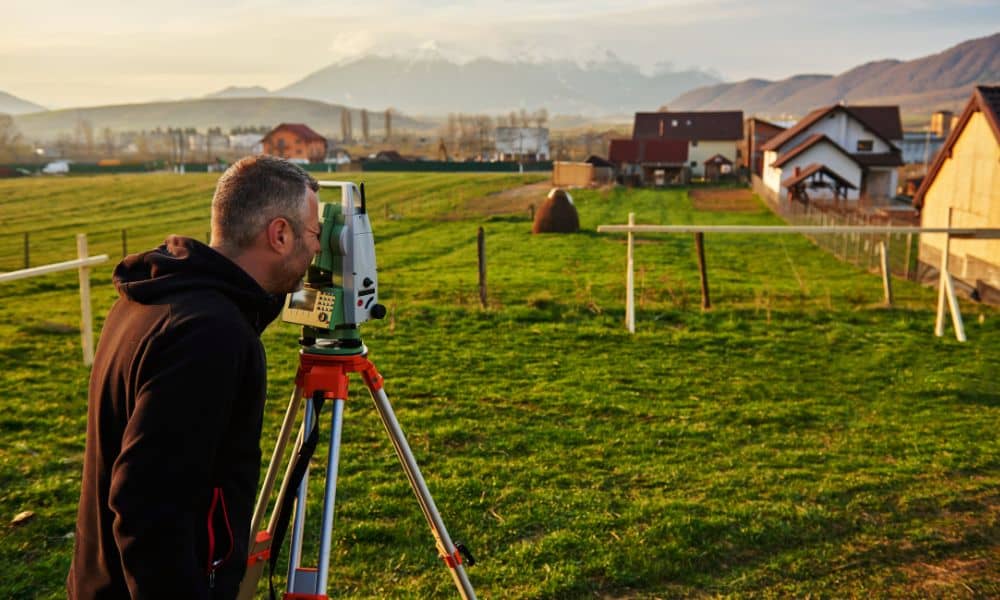
Crews may need to bring special equipment. They may need to clear access or walk long distances just to reach the site.
In Pahrump, this happens often. Many lots sit outside main roads.
Hard access equals more time. More time equals higher cost.
Property records
Records can make a survey easy or slow it down.
Clear records help the survey move faster. The surveyor can confirm lines and move forward.
Older parcels are different.
Some have missing data. Some have unclear legal descriptions. Some do not match what is on the ground.
In those cases, the surveyor has to dig deeper. That means checking old maps, comparing nearby parcels, and verifying measurements step by step.
That research time adds to the cost.
If you have documents like a deed or old survey, share them early. It helps reduce guesswork.
Property corner markers
Markers, often called pins, show the corners of your land.
If they are still in place, the job is faster. The surveyor can confirm property boundaries without starting from zero.
If they are missing, everything changes.
The surveyor has to re-establish those points. That means more measurements and more time in the field.
In rural areas like Pahrump, markers can move or disappear over time. Wind, erosion, and past work can disturb them.
Missing markers often increase the cost.
Your reason for the survey
The reason you need the survey changes everything.
The purpose of the survey often changes the price. A fence, land purchase, new home, driveway, permit, or commercial project may require different levels of detail. More detail means more fieldwork and documentation.
If you only need to confirm boundaries for a purchase, the work may stay simple.
If you plan to build, the survey must be more detailed. It may include elevation data, exact boundary lines, and documents for permits.
If you are adding a driveway or fence, placement must be precise.
More detail means more time. More time means higher cost.
Terrain conditions
Pahrump looks flat at first glance. That can be misleading.
Desert land can include rocks, loose soil, and uneven ground. These conditions slow down fieldwork.
Crews may need to adjust how they measure. Equipment may take longer to set up.
Weather also plays a role. Heat and wind can affect how long the job takes.
Even open land can take time to survey.
Timing and scheduling
Timing affects cost more than most people expect.
If you need a survey quickly, you may pay more. Rush work often means adjusting schedules or moving to other jobs.
If you plan ahead, you usually avoid those extra costs.
Ordering early gives the surveyor more flexibility and keeps pricing steady.
What the quote includes
Not all quotes cover the same work.
Some include only field measurements. Others include maps, reports, and marked corners.
Two quotes may look close in price but offer different results.
Check what you are getting.
Ask if the survey includes:
- Marked property corners
- A survey map
- Legal documentation
- Support for permits
Missing items can cost more later if you need them added.
Why costs can increase during the job
Sometimes the price changes after work begins.
New issues can show up in the field.
The surveyor may find unclear boundaries. Records may not match the land. Markers may be missing.
They may need to return to the site or run extra checks.
That extra work protects you from bigger problems later.
Typical cost range
Simple surveys typically range from $300–$800, while more complex surveys can exceed $1,000 depending on property conditions.
More detailed surveys cost more, especially for large parcels, building plans, or unclear records.
There is no fixed price. Each property has its own conditions.
That is why quotes vary.
How to avoid overpaying
To avoid overpaying, know why you need the survey, gather your documents early, ask what the quote includes, and plan ahead. The cheapest option can miss important details that cost more later.
A few simple steps help:
- Be clear about your goal
- Share your documents early
- Ask what is included
- Plan before you need it
Do not choose based on price alone. A bad survey can cost more to fix than a good one costs upfront.