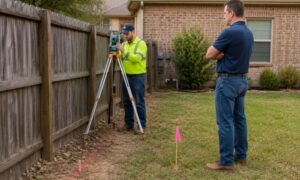
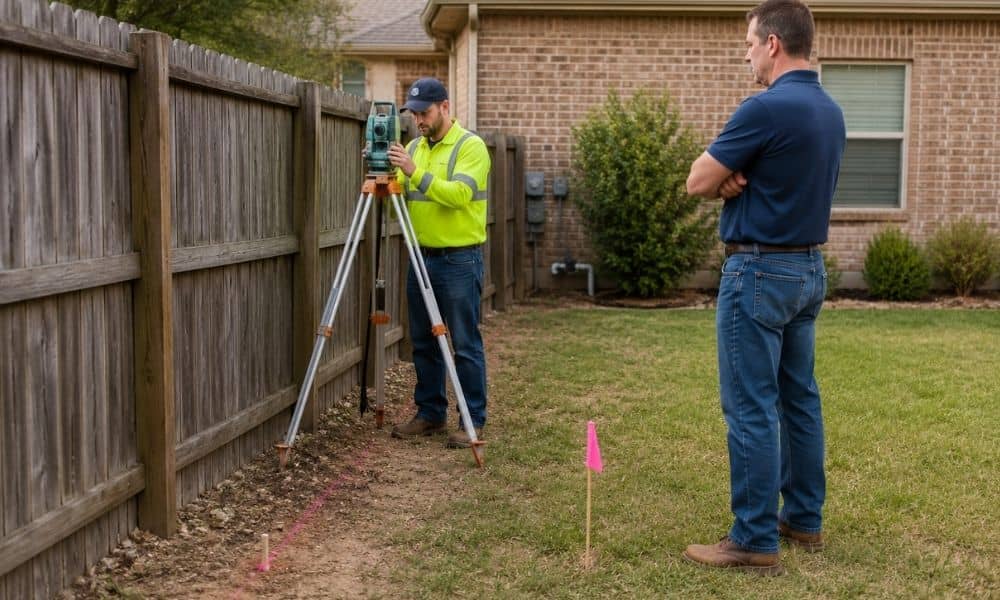
If a neighbor’s fence is on your property, you have the right to ask for it to be moved. Your first step is to hire a licensed land surveyor to do a boundary survey. This survey legally shows where your property line is. Without it, you have no proof to back up your claim.
Finding out that a neighbor’s fence is on your property is stressful. It can affect your home’s value and your legal rights. In North Las Vegas, Nevada, this problem is more common than most people think. Before you talk to your neighbor or call a lawyer, you need one thing first: a boundary survey that proves exactly where your property line sits.
How Do You Know If the Fence Is on Your Property?
You might think a fence is on your land if it does not match your deed or property map. But thinking it is not proof. Only a licensed land surveyor can produce a legal boundary survey that confirms whether the fence crosses your line.
Most homeowners guess where their property line is. They rely on old fences, rough measurements, or a neighbor’s word. None of these will hold up in court.
Signs a Fence Might Be on Your Land
- The fence does not line up with other fences on your street
- Your deed or property map shows a different boundary
- You cannot find the original corner stakes in your yard
- The fence was put up without your knowledge
- A title report shows a possible boundary conflict
According to the American Land Title Association (ALTA), boundary disputes are one of the top five causes of real estate lawsuits in the United States. Many of them start with a fence placed in the wrong spot.
Step 1: Get a Boundary Survey
A boundary survey is a legal measurement done by a licensed land surveyor. It shows the exact edges and corners of your property. In North Las Vegas, it is the only document that courts and title companies accept to resolve a fence dispute.
A boundary survey is your most important tool. Without one, you are having an argument, not making a legal claim.
What a Boundary Survey Includes
- GPS measurements of all property corners
- A check against your deed, plat map, and past surveys
- Placement of new corner stakes if old ones are missing
- A certified map showing all measurements and fence locations
- A written report that can be used in courts
Nevada Laws You Should Know
In Nevada, fence disputes fall under state property law. NRS 11.150 says that if a neighbor has used your land for five straight years and paid taxes on it, they may be able to claim ownership. This is called adverse possession. Acting fast is very important.
Key Nevada Laws to Know
NRS 11.150 – Adverse Possession If a neighbor’s fence has sat on your land for five or more years, they could legally try to claim that land. This is why waiting is risky.
NRS Chapter 38 – Mediation Before going to court in Nevada, both sides are expected to try mediation first. A neutral person helps both parties work out the problem without a judge.
NRS 202.500 – Spite Fences Nevada law does not allow a fence to be built just to bother a neighbor. If the fence was placed on purpose to cause harm, this law may apply.
What to Do, Step by Step
If a fence is on your property, start by getting a boundary survey. Then notify your neighbor in writing. If they refuse to act, try mediation under NRS Chapter 38. If that fails, take the matter to civil court. Do not remove the fence yourself.
Step 1. Hire a Licensed Land Surveyor, This is your first and most important move. Get a certified boundary survey completed before anything else.
Step 2. Review the Results With Your Surveyor. Go over the survey map together. Confirm exactly how far the fence crosses your line.
Step 3. Write a Letter to Your Neighbor. Send a certified letter. Attach a copy of the survey. Ask them to move the fence within 30 to 60 days.
Step 4. Try Mediation. If your neighbor refuses, pursue mediation. Nevada courts expect both parties to try this before filing a lawsuit.
Step 5. Go to Court If Needed. If mediation does not work, you can file a civil case in Nevada District Court. Your certified boundary survey will be your main piece of evidence.
What Not to Do
- Do not tear down or move the fence yourself
- Do not use Google Maps or a plat printout as legal proof
- Do not wait, the five-year adverse possession clock may already be running
- Do not rely on a verbal agreement, get everything in writing and recorded
How a Survey Protects Your Home’s Value
A boundary survey does more than fix a fence problem. It also:
- Stops future claims from being accepted by a court
- Is required by most title companies when you sell your home
- Supports your case in HOA or permit disputes
- May be needed by the City of North Las Vegas for certain building permits
According to the National Society of Professional Surveyors (NSPS), 1 in 8 homes in the U.S. has some kind of boundary issue. Catching it early saves time, money, and stress.
Frequently Asked Questions
Can I remove my neighbor’s fence if it is on my property?
No. Removing a fence without a court order can lead to legal trouble in Nevada. Follow the proper steps, starting with a boundary survey.
What if my neighbor says the survey is wrong?
A certified survey from a licensed land surveyor is a legal document. If your neighbor still disagrees, mediation or civil court is the next step.
Does homeowner’s insurance cover fence encroachment disputes?
Usually, no. Standard policies do not cover boundary disputes. Check your owner’s title insurance policy. Some do include coverage for this type of issue.
How long does it take to resolve a fence dispute?
Simple cases resolved through mediation can wrap up in weeks. Cases that go to civil court can take six months or more.