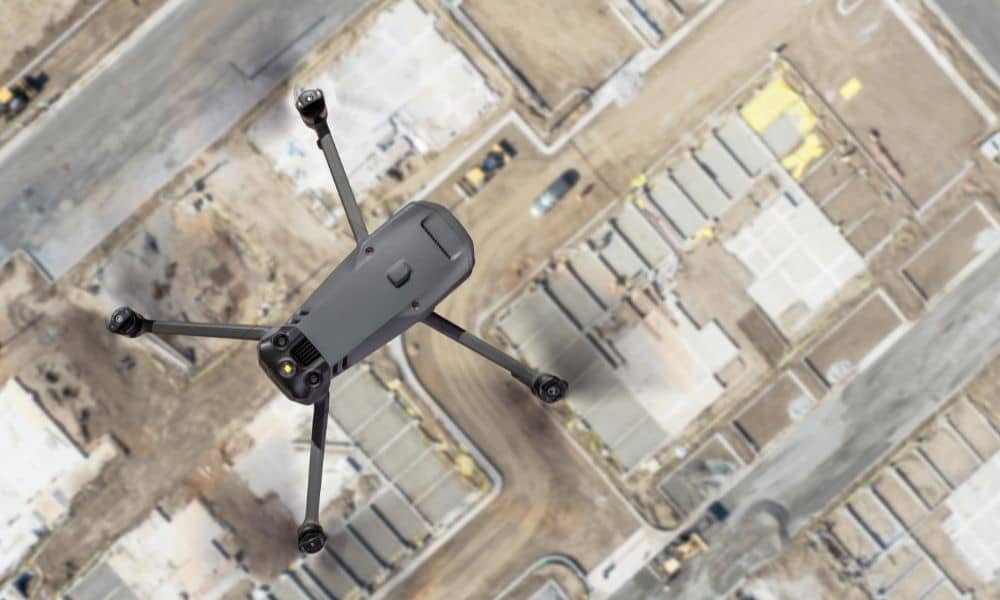
North Las Vegas is growing fast. New warehouses rise near I-15. New homes spread across open desert land. Commercial buildings move from dirt to steel in a short time. Because of this fast growth, time matters more than ever. Now, a change in federal drone rules could help projects move even faster. The FAA is working on new rules that allow drones to fly Beyond Visual Line of Sight, also called BVLOS. That means a drone could fly farther without the pilot needing to see it the whole time. While that sounds technical, the impact on drone surveying could be huge.
For developers, this could mean shorter project timelines almost overnight.
Why Drone Surveying Already Matters
First, let’s talk about what drone surveying already does.
Many sites in North Las Vegas cover large areas. Industrial lots can stretch across dozens of acres. New neighborhoods take up wide sections of desert. Because of this size, mapping a site from the ground takes time.
However, drone surveying makes this process faster.
A survey team launches a drone with cameras and mapping tools. The drone flies over the property and collects detailed data. Then engineers use that data to design grading plans, drainage systems, and building layouts.
As a result, developers get maps faster. Contractors calculate dirt volumes sooner. Project managers make decisions earlier.
In a busy market, that speed gives projects an edge.
The Limitation Most Clients Don’t Notice
Even though drone surveying works well today, it still follows strict rules.
Right now, most drones must stay within the pilot’s visual line of sight. In simple terms, the pilot must see the drone at all times. On small sites, this rule causes few problems. However, on large sites, it slows things down.
For example, a 60-acre warehouse project may need several launch spots. Crews must move equipment again and again. Each move takes time. Each setup breaks the flow of work.
So while drone surveying saves time compared to older methods, it still faces limits on large properties.
That is where BVLOS comes in.
What BVLOS Could Change
BVLOS allows longer drone flights without the pilot watching it the whole time. In real terms, that means fewer stops.
Instead of breaking a site into small sections, a survey team could map the whole property in one steady flight. As a result, they spend less time setting up and more time collecting data.
In North Las Vegas, this matters for several reasons.
First, many projects sit on wide, open land. Second, long utility lines and access roads stretch across large areas. Third, many builders work under tight deadlines.
With expanded BVLOS use, drone surveying could cover these large areas more smoothly.
That means faster mapping. Faster data. Faster design updates.
And in turn, faster construction.
How Project Timelines Could Shrink
Construction depends on early site data. Engineers need accurate maps before crews pour concrete or install utilities. When mapping takes longer, everything else waits.
However, when drone surveying speeds up, delays shrink.
Imagine a new warehouse planned near North 5th Street. The developer needs updated site data after grading. If mapping takes several days because crews must move equipment many times, the design team waits. Meanwhile, workers pause.
But if one long flight captures the entire site, the team gets results quickly. Engineers adjust plans sooner. Crews return to work faster.
That difference may seem small. Still, in construction, even a few days can save thousands of dollars.
Why North Las Vegas Benefits
Not every city would gain the same benefit from expanded drone rules. Dense cities with tall buildings can limit drone paths.
However, North Las Vegas has wide roads, open land, and active construction zones. These conditions support large-area mapping.
At the same time, industrial growth continues across the region. New logistics centers and manufacturing sites require detailed maps over big spaces.
Because of that, better drone surveying fits perfectly with how the city is growing.
As development spreads outward, speed becomes even more important.
What This Means for Developers and Builders
Most developers focus on three things: speed, cost, and steady progress.
Improved drone surveying supports all three.
First, faster mapping reduces downtime between phases. Second, fewer setup moves lower costs. Third, regular aerial updates help project managers track progress.
In addition, lenders like clear site records. Aerial maps show progress clearly. That helps with funding and review.
So improved drone surveying helps more than engineers. It supports the whole project team.
Professional Oversight Still Matters
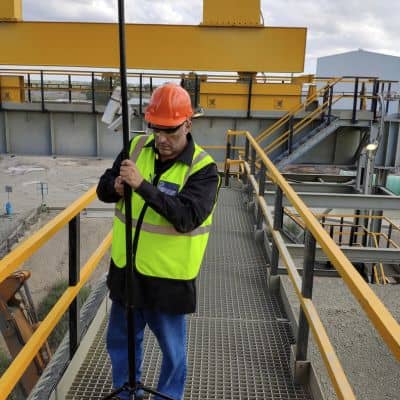
Even with new rules, drone surveying still requires skilled professionals.
A drone collects data. However, licensed surveyors review, check, and confirm that data. They combine aerial information with ground measurements. They make sure final maps meet local standards.
So while BVLOS expands how drones fly, it does not replace expertise.
Instead, it strengthens it.
Firms that prepare early for these changes may move faster. Those that treat drones as an afterthought may fall behind.
Looking Ahead
FAA rule updates can sound distant or complex. Yet this one could shape how projects move.
The city continues to grow. Each new development depends on early site data. When mapping happens faster, construction can start sooner.
Drone surveying already helps projects move forward. Expanded BVLOS operations could push that progress even further.
So if you plan to build, buy land, or develop property, ask how your survey team uses drone surveying. Ask how they handle large sites.
Because in a fast market like North Las Vegas, even small gains in speed can make a big difference.
And sometimes, a rule change far away can reshape timelines right here in the Nevada desert overnight.