
When people talk about a perc test, the conversation almost always starts with soil. Will it drain? Will it pass? Will the land qualify for a septic system?
That focus makes sense. However, many projects stall even after the soil performs well. The delay does not come from the ground. Instead, it comes from missing or unclear survey information.
This is one of the most common surprises land buyers and builders face. They do everything right on the testing side, yet approvals still get pushed back. Understanding why this happens can help you avoid costly delays before they start.
The Problem Usually Isn’t the Soil
A perc test measures how fast water moves through the soil. On paper, that sounds simple. In real projects, though, the test is only one piece of a larger approval process.
Agencies do not approve soil by itself. They approve a septic system placed in a specific location on a legal parcel. Because of that, the test result must clearly show where it was taken and how it fits within the site.
If that location cannot be verified, the test result loses value. Even strong soil performance may not matter. As a result, the project can pause until the paperwork catches up with the fieldwork.
Where Many Perc Test Plans Go Off Track
Most issues begin before the perc test ever happens. Property owners often schedule testing as soon as they gain access to the land. At that point, the site may look open and usable, so choosing a test spot feels straightforward.
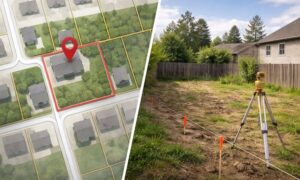
However, without a current survey, there is no proof that the chosen location meets all site rules. Boundaries may not be where people assume. Easements may not be visible. Setback requirements may quietly limit where testing is allowed.
Once a test pit is dug in the wrong area, the result may not be accepted. Even worse, the test may need to be repeated in a new location. That means more time, more coordination, and more cost.
Why Survey Data Shapes Perc Test Locations
A perc test supports future septic design. Septic systems must follow placement rules that protect nearby properties, water sources, and structures. Survey data helps confirm those limits.
With accurate survey information, planners can see how far test locations sit from property lines. They can also confirm whether the site includes easements or access paths that restrict use. When these details are clear, test locations can be chosen with confidence.
Without survey data, test pits are placed based on guesswork. That guesswork often looks fine in the field but fails during review. This is why many perc test delays come from paperwork, not soil conditions.
Why Site Plans Matter More Than People Expect
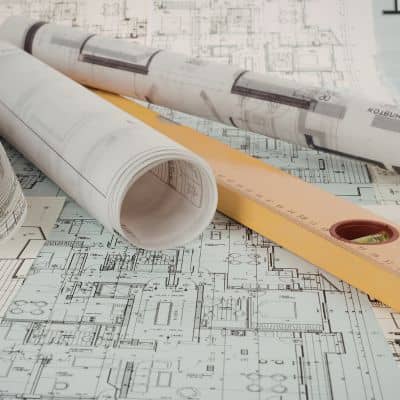
A perc test does not stand alone. Reviewers need to see how the test fits into the overall plan for the property. This usually means tying test locations to a site plan that reflects real conditions.
A surveyed site plan shows where the test occurred, where a drain field could go, and where future buildings may sit. It connects soil results to actual land use.
When plans rely on old maps or rough sketches, reviewers often ask for revisions. That step can push a project back weeks. In contrast, survey-backed plans move through review much faster because the information is clear and consistent.
The Survey Issues That Cause Repeat Testing
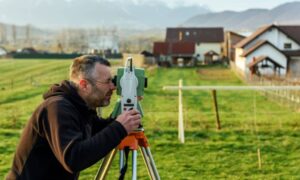
Surveyors see the same problems across many projects, especially on undeveloped land. Fence lines are often mistaken for property lines. Old plats are reused even though the site has changed. Corners may never have been marked on the ground.
On larger parcels, these issues become even harder to spot. With fewer visual references, it’s easy to assume boundaries that are not accurate. When test locations end up too close to a line or easement, the results may not count.
In these cases, the perc test itself did nothing wrong. The placement did.
Understanding What Level of Survey Is Needed
Not every perc test requires the same survey effort. Some properties are simple. Clear boundaries and open buildable areas make planning easier. In those cases, confirming boundaries may be enough.
Other sites require more detail. Large lots, tight layouts, or complex site features often need additional survey support so test locations align with future plans. Knowing which situation applies to your property helps avoid surprises later.
The key is understanding this before testing begins, not after results are submitted.
A Better Way to Plan a Perc Test
Projects move more smoothly when survey work comes first. Confirming boundaries early allows test locations to be chosen with confidence. Those locations can then be shown clearly on plans that reviewers trust.
When perc tests follow this sequence, results tend to hold up during review. Fewer revisions are needed. Fewer tests must be repeated. Overall timelines stay intact.
This approach may feel slower at the start, but it often saves weeks or months later.
Why This Matters Even More on Rural and Large Properties
Rural and large parcels face higher risk because assumptions are easier to make and harder to verify. Boundaries stretch farther. Records may be older. Septic systems are often required because public sewer is not available.
On these sites, survey data replaces guesswork with clarity. It ensures that perc tests support real, approvable plans instead of creating new questions.
Final Thoughts
A perc test is not just a soil check. It is part of a planning process that depends on accurate site information.
When the right survey supports the test, results become usable, defensible, and ready for approval. When survey data is missing, even good soil can lead to delays.
Starting with the right survey helps protect your time, your budget, and your project goals. In many cases, it is the difference between moving forward smoothly and starting over.