How To Find Your Property On FEMA’s Flood Insurance Rate Maps

What are FEMA flood maps?
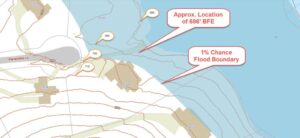
FEMA’s Flood Insurance Rate Maps (FIRMs) or just Flood Maps are provided after a flood risk assessment has been completed or updated for a community.  This study is known as a Flood Insurance Study.  The FIRM gives you the Base Flood Elevations (BFEs) and insurance risk zones in addition to floodplain boundaries.  The FIRM may also show a delineation of the regulatory floodway.

Once the “insurance risk zone”  (commonly referred to as the flood zone) is determined, actuarial rates, based on these risk zones, are then applied for newly constructed, substantially approved, and substantially damaged buildings.  FEMA uses these rates to determine the insurance rate you will pay for flood insurance

FEMA’s Digital Flood Maps

FEMA discontinued the production and distribution of paper flood maps in 2009 as part of its Digital Vision Initiative. This affected all the Flood Maps, boundary information, and study reports. However, clients can still view the products for free through their website or buy them in digital format.

To view these flood maps online, go to FEMA’s Map Service Center and key in your address (hi-lited area shown here) search for your home.  This will prompt you to then select the map that covers your area.  The Flood Maps are somewhat cumbersome to use online. It is best to go through the tutorial on the bottom right of the address search page for an easier and more effective use of the GIS map.

author avatar
Surveyor

More Posts

Commercial development on former public land where an ALTA land title survey is required before construction
alta survey
Surveyor

When an ALTA Land Title Survey Is Required

Nevada often makes news about public land sales. When land moves from federal control into private hands, new chances follow. Developers plan shopping centers. Investors study warehouse sites. Commercial buyers move fast. However, land that once belonged to the federal government does not act like a normal commercial lot. In

Read More »
Drone surveying over an active industrial construction site in a growing desert development area
land surveying
Surveyor

Drone Surveying: New FAA Rules Could Cut Build Time

North Las Vegas is growing fast. New warehouses rise near I-15. New homes spread across open desert land. Commercial buildings move from dirt to steel in a short time. Because of this fast growth, time matters more than ever. Now, a change in federal drone rules could help projects move

Read More »
Flood warning sign near Colorado River homes showing why homeowners may need an updated elevation certificate
land surveying
Surveyor

Why Flood Warnings Trigger Elevation Certificate Requests

When flood warnings hit the Colorado River this month, most people in Laughlin looked toward the shoreline. However, the real impact didn’t start with water in the streets. Instead, it started with phone calls, emails, and letters from lenders and insurance companies. Suddenly, many homeowners heard the same question: “Do

Read More »
Surveyor from a land survey company measuring a property boundary with a total station
land surveying
Surveyor

What a Land Survey Company Checks Before Lawsuits

Property line disputes rarely start in court. Instead, they usually begin with something small — a fence, a shed, a driveway, or tree clearing. One neighbor believes the line sits in one place, while the other disagrees. Then voices rise, letters get sent, and lawyers get involved. However, most of

Read More »
Survey equipment set up on a construction site for a topographic survey re-check after project delays
land surveying
Surveyor

Why Stalled Projects Need Topographic Survey Re-Checks

In Las Vegas, construction projects move fast—until they don’t. Financing pauses, permit issues, contractor changes, or market shifts can bring a project to a full stop. When that happens, many property owners assume they can simply pick up where they left off. However, that assumption often leads to expensive surprises.

Read More »
Professional land surveyor marking property boundaries using precision equipment on a construction site
land surveyor
Surveyor

Behind the Stakes: Why You Need a Licensed Land Surveyor

Most people think land surveying looks simple. A truck pulls up. Someone walks around with tools. They place a few wooden stakes in the ground. Then they leave. From the outside, the job looks quick and easy. However, the real work starts long before the first stake touches the soil.

Read More »