Property line disputes rarely start in court. Instead, they usually begin with something small — a fence, a shed, a driveway, or tree clearing. One neighbor believes the line sits in one place, while the other disagrees. Then voices rise, letters get sent, and lawyers get involved. However, most of these problems could have been avoided much earlier. That’s exactly where a land survey company plays a critical role. Before conflicts grow into lawsuits, survey professionals check records, evidence, and field conditions to confirm where boundaries truly sit. If you own land in places like Pahrump, Nevada — where parcels are often large and markers may be old — this step matters even more.
Why Boundary Disputes Happen So Often
Many owners trust what they can see. For example, they assume a fence marks the boundary. Others rely on a listing map from a real estate site. Some even trust what a neighbor says about the line. Unfortunately, none of those sources prove a legal boundary.
Also, land changes over time. Markers get buried. Fences shift. Corners disappear. In rural and desert areas, original survey monuments may sit underground or get disturbed during grading work. As a result, honest mistakes happen.
Therefore, surveyors never rely on guesswork. They rely on evidence.
The First Thing a Land Survey Company Reviews — Your Legal Description
Before anyone steps into the field, a land survey company studies the legal description of your parcel. This description lives inside your deed and recorded documents. It defines your property using measurements, directions, and reference points.
However, not all descriptions match perfectly. Some come from very old surveys. Others contain wording that conflicts with newer records. Because of that, surveyors compare multiple documents instead of trusting just one.
They also check how your description connects with neighboring parcels. This step often reveals overlaps or gaps that owners never knew existed.
Next, They Study Plats and Recorded Maps
After the deed review, surveyors examine subdivision plats and recorded maps. These documents show how lots were originally divided and measured.
This matters because people often build improvements based on visible occupation — not recorded layout. For instance, a fence might follow a tree line instead of the true lot line. Over time, everyone accepts it as “correct.” Still, the recorded plat may show something different.
So a land survey company compares:
- original lot dimensions
- recorded bearings and distances
- corner references
- block layouts
Then they look for mismatches between paper records and real-world use.
Easements — The Hidden Source of Many Arguments
Boundary disputes don’t always involve ownership lines. In many cases, they involve easements. These allow someone limited rights across part of a property.
Utility companies, road access, and shared driveways often use easements. Yet many owners forget they exist. Others never knew about them at all.
Because of that, a land survey company searches for:
- utility easements
- access easements
- drainage corridors
- shared-use strips
This step prevents a common mistake — building inside an easement area and triggering conflict later.
Then Comes the Field Investigation
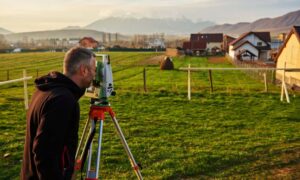
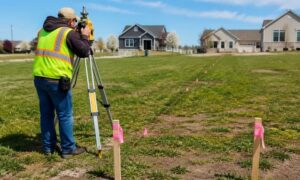
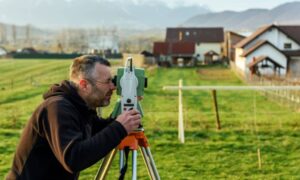
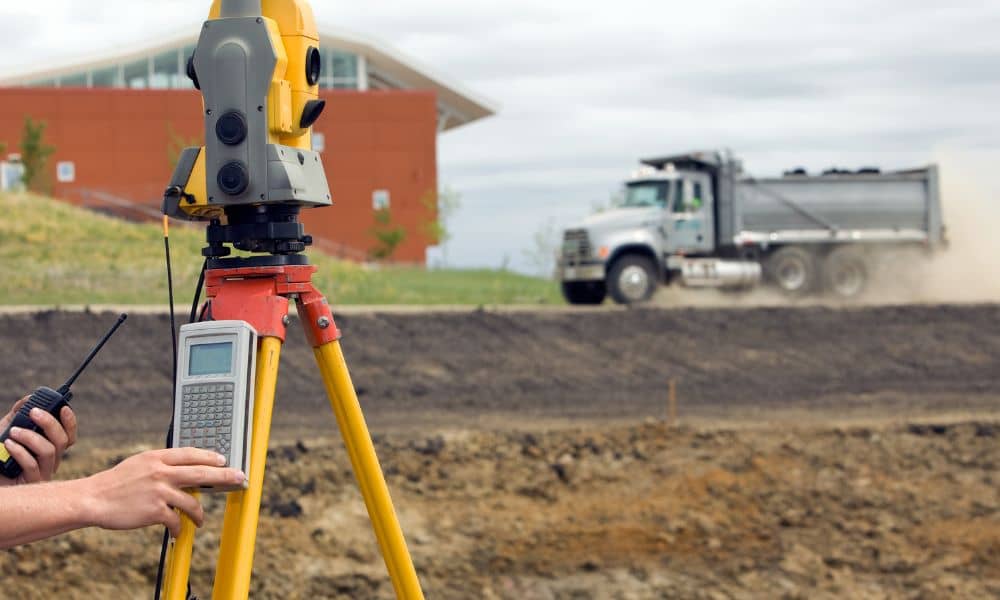
Once records get reviewed, field work begins. This is the part most people picture, but it only works well because of the research done first.
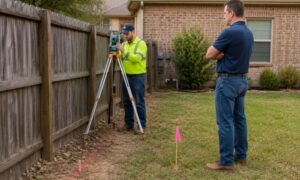
Surveyors search for original boundary monuments. These may include iron pins, capped rods, stones, or concrete markers. Sometimes they find them right away. Other times they must dig carefully or measure from known control points.
Importantly, not every metal rod in the ground counts as valid. A land survey company evaluates whether each marker matches recorded evidence. If it doesn’t, they treat it as unreliable.
They Also Check Occupation Lines — But Don’t Trust Them Blindly
Surveyors also examine how land gets used today. They look at fences, walls, hedges, driveways, and long-standing improvements. These features show occupation — not legal ownership — but they still provide useful clues.
For example, if a fence has stood in one place for decades, surveyors document it. However, they don’t assume it marks the boundary. Instead, they compare it against measurements and records.
This careful comparison often explains why neighbors disagree. One person trusts occupation. The survey trusts evidence.
Encroachments Get Flagged Early
A major benefit of hiring a land survey company involves early encroachment detection. Encroachments happen when a structure or improvement crosses a boundary line.
These include:
- fences built too far
- sheds placed near corners
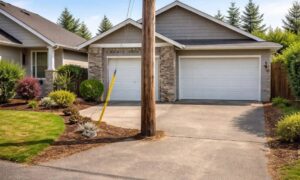
- driveways crossing lines
- grading beyond limits
When surveyors find these early, owners can adjust plans before spending more money. That simple timing difference often prevents legal escalation.
Documentation Protects Everyone
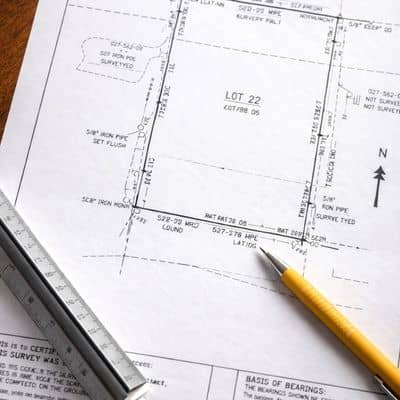
Survey work doesn’t end with measurements. A land survey company produces formal drawings and plats that show findings clearly. These documents explain how boundaries were determined and what evidence supports them.
This documentation matters because disputes often turn into “who says so” arguments. A professional survey replaces opinions with measured proof.
Moreover, clear survey drawings help attorneys, title companies, lenders, and courts understand the situation quickly — if conflict ever reaches that stage.
Why This Matters Even More in Pahrump and Similar Areas
Large desert parcels create special challenges. Corners may sit far apart. Markers may lie buried under sand or gravel. Old surveys may reference features that no longer exist.
At the same time, many owners perform their own staking or marking. While intentions stay good, results often miss the true line.
Therefore, a land survey company becomes the neutral third party. They bring tools, records, and methods — not opinions.
When You Should Call Before Trouble Starts
Boundary disputes rarely appear out of nowhere. Usually, they follow improvement work. So call a land survey company before:
- building a fence
- placing a structure near an edge
- clearing trees near a line
- installing a driveway
- buying vacant land
- resolving a neighbor disagreement
Early verification costs far less than legal cleanup later.
The Simple Truth
Most property lawsuits begin with small boundary mistakes. However, most of those mistakes are preventable. A land survey company checks records, maps, monuments, occupation, and easements before conflict grows.
In other words, they replace assumptions with facts.
And when facts come first, lawsuits usually never follow.